
The Narrative
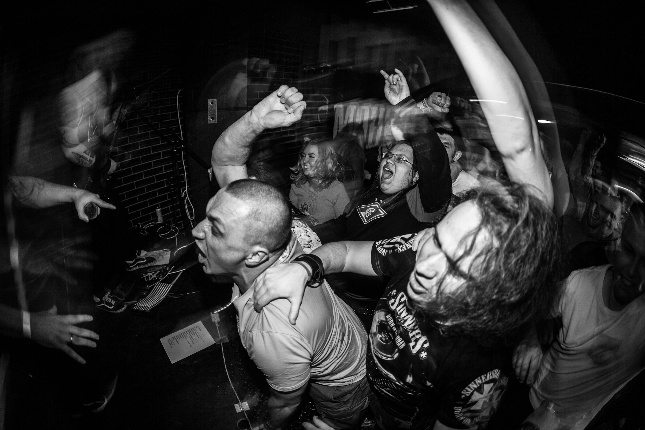
In a culture that prides itself on individualism, it is striking how deeply our lives are shaped by the social bodies around us. Consider how many of our daily decisions—what we wear, what we eat, how we speak, how we celebrate—are influenced by the environments we inhabit and the people we surround ourselves with. Even our most personal habits often emerge within a broader cultural context.
We are rarely as independent as we imagine.
Human beings are social creatures. We develop our values, identities, and coping mechanisms through interaction with others. Community forms the invisible architecture of our lives, shaping both the opportunities available to us and the expectations placed upon us.[¹]

And yet, when conversations turn to addiction and recovery, the narrative often shifts dramatically.
Suddenly, the burden appears to rest solely on the individual.
“You have to choose sobriety.”
“You have to fix your life.”
“It’s all on you.”
While personal responsibility is undeniably important, this perspective overlooks something essential: addiction does not develop in a vacuum, and recovery rarely occurs in isolation.[²]
The Tension
There are two truths that coexist within human experience.
First, we are deeply dependent on the people and cultures around us. Our environment shapes our behaviors more than we often recognize. Norms, expectations, and social rituals quietly influence what we perceive as normal or acceptable. [¹]
Second, everyone ultimately retains the power to choose their path. Even within powerful cultural forces, the individual remains capable of decision, transformation, and change.
These truths create constant tension.
On one side lies dependence—the recognition that community, relationships, and culture profoundly shape our behavior. On the other side lies agency—the capacity of individuals to take responsibility for their lives and make meaningful decisions.
Healthy cultures recognize and balance both realities. They cultivate environments that encourage resilience while also supporting individuals who are struggling.
Toxic cultures, however, tend to collapse this balance. They either deny personal responsibility entirely or, more commonly in discussions of addiction, place the entire burden on the individual.
But addiction is not simply an individual failure of willpower. It is also a cultural phenomenon.
The environments we create—social spaces, celebrations, coping norms, and community rituals—play a significant role in shaping whether substances become central to our lives.²][³]
Culture and Recovery
If culture can contribute to addiction, it can also contribute to recovery.
Across communities, a growing movement is demonstrating that meaningful connection and celebration do not require substances. Sober social movements, recovery communities, and peer-support networks are helping redefine what it means to gather, celebrate, and belong.³][⁴]

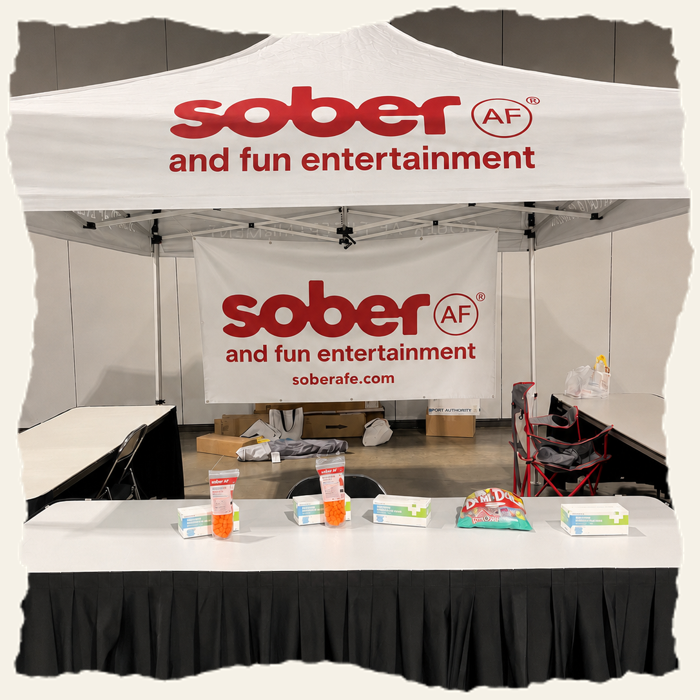
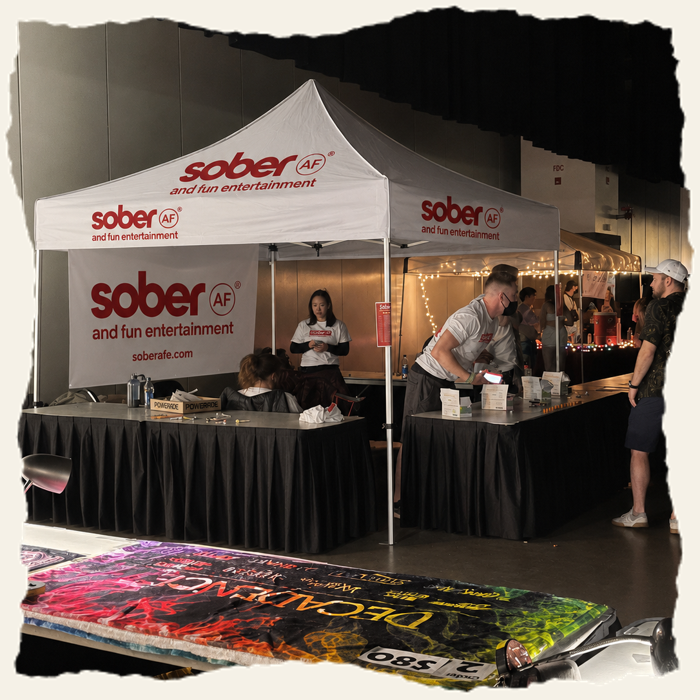
Organizations such as Sober AF Entertainment represent one example of this cultural shift. By hosting substance-free events in traditionally social environments—music venues, gatherings, and celebrations—they challenge the assumption that intoxication must accompany connection.
These spaces matter.
They offer individuals in recovery a way to participate fully in community life without compromising their commitment to sobriety. At the same time, they subtly reshape cultural expectations for everyone involved. What once seemed normal begins to shift. New possibilities for connection begin to emerge.
Culture, after all, is not fixed. It evolves through the collective actions of individuals.
The Culmination
This brings us back to the tension between dependence and agency.
Yes, individuals must ultimately choose recovery. No one can make that decision for them.
But communities also carry responsibility. The environments we create can either reinforce addiction or cultivate healing.
When communities normalize excessive substance use, individuals struggling with addiction face an uphill battle. When communities instead foster connection, accountability, and healthy forms of celebration, recovery becomes far more attainable.³][⁴]
Change, therefore, does not occur through individuals alone, nor through culture alone.
It occurs when individuals collectively reshape culture.
And that collective decision begins with a simple declaration—one that recognizes both personal responsibility and communal influence:
Death to addiction.

Not merely as a slogan, but as a cultural commitment. A shared resolve to build environments where recovery is possible, belonging is accessible, and individuals are not left to fight their battles alone.
Because when culture inspires change, recovery becomes more than an individual struggle. It becomes a community movement.
Footnotes
[1] World Health Organization – Social Determinants of Mental Health
https://www.who.int/publications/i/item/9789241503594
[2] Scientific Research Publishing – Sociological Influences on Addiction: Culture and Ethnicity
https://www.scirp.org/journal/paperinformation.aspx?paperid=128040
[3] Springer Nature – Cultural Competence for Drug Addiction and Recovery
https://link.springer.com/article/10.1057/s41285-025-00252-9
[4] Taylor & Francis – Exploring Treatment, Recovery, and Community Factors in Addiction
https://www.tandfonline.com/doi/full/10.1080/07347324.2025.2474297