
A Frame of Reference
Before discussing addiction directly, it is important to situate the conversation within a broader social framework. Issues of substance use, recovery, and suicidality rarely emerge in isolation. They unfold within the complex social environments that shape identity, belonging, and meaning.
When we explore adjacent areas of individual and social behavior, we are not moving away from the issue at hand. Rather, we are widening the scope of understanding. Addiction and suicide are not singular problems with singular causes; they are multifaceted human struggles influenced by psychological, cultural, and relational forces.[¹]
To approach these issues well requires more than a single frame of reference. It requires something closer to a prism of perspective—one that reveals how different dimensions of human experience refract the same underlying reality.
Through this prism, one theme becomes increasingly visible: disconnection.
Disconnection from others.
Disconnection from community.
And often, disconnection from one’s own sense of identity and purpose.
Addiction frequently grows in the spaces where those connections have weakened.[²]

Connectedness
Connectedness is one of the most powerful forces in human well-being. At its simplest level, it refers to the sense that one belongs—that their presence matters within a network of relationships, culture, and shared experience.[³]
Two elements are particularly important in understanding this idea.
The first is social identity, the sense that a person belongs to a group, tradition, or shared way of life. The second is social integration, the ability for individuals to maintain their uniqueness while still participating in a cohesive community.
Together, these elements form what might be called psychosocial integrity—the balance between individuality and belonging.

For many individuals navigating addiction, this balance becomes disrupted. Substance use often begins as a way of coping with emotional pain, stress, or trauma, but over time it can erode the very relationships and structures that once provided stability.[²]
Isolation grows.
Identity fractures.
Belonging becomes harder to find.
This internal fragmentation can create a profound sense of dissonance within a person. Many individuals in addiction describe feeling divided against themselves, caught between the person they believe they are and the behaviors addiction compels them toward.
The language of dissonance and consonance helps illustrate this dynamic. In music, harmony emerges when different tones align to create a unified sound. When those tones clash, dissonance arises.
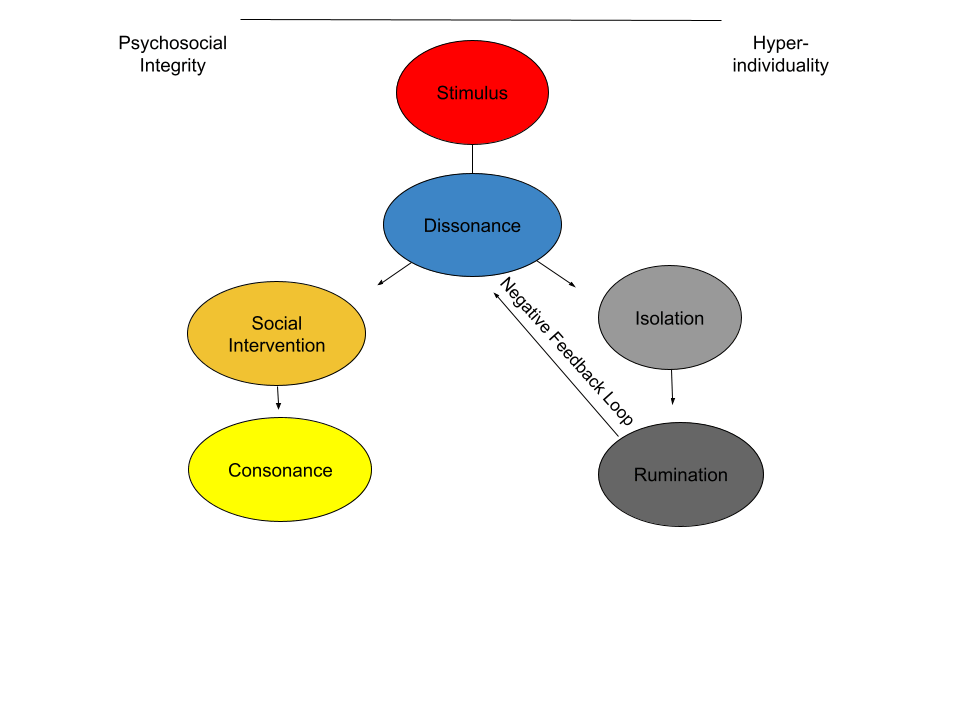
Human life operates in a similar way. When identity, relationships, and purpose align, individuals experience harmony. When these elements fracture, life begins to feel chaotic and disordered.
Addiction often amplifies this dissonance.[²]
Recovery, however, tends to move in the opposite direction. Through community, mutual understanding, and shared experience, individuals begin to rediscover alignment between who they are and how they live.
Connection restores harmony.[³]
Recovery and Community
Recovery rarely unfolds in isolation. While the decision to change must ultimately come from the individual, the process of sustaining that change is almost always relational.
Recovery communities provide something that addiction often strips away: belonging.
Within these spaces, individuals encounter others who understand their struggles without judgment. The shared recognition of suffering creates an environment where honesty becomes possible and shame begins to dissolve.[³]

This is why community-based recovery movements have become such an important part of addiction healing. From peer support groups to sober social communities, these spaces help individuals rebuild the social bonds that addiction once fractured.
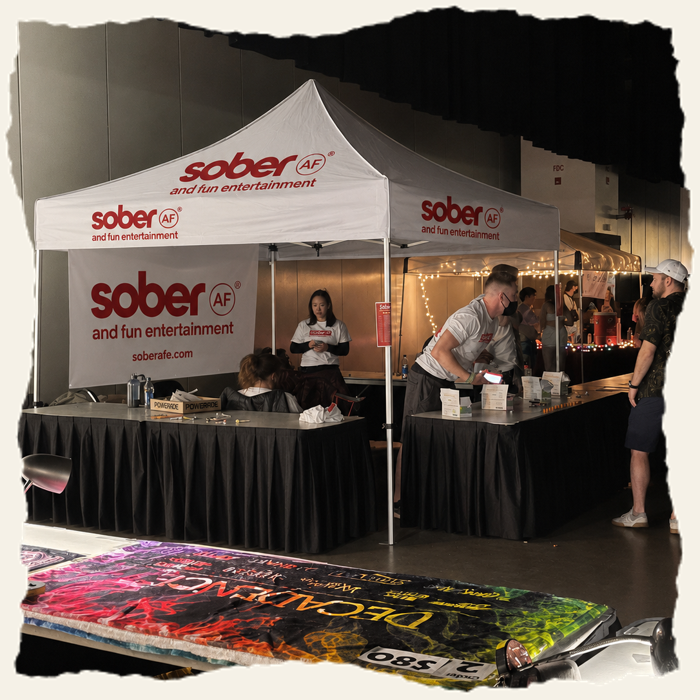
Organizations such as Sober AF Entertainment represent one example of this cultural shift. By creating substance-free social environments where people can gather, celebrate, and connect, these initiatives challenge the long-standing assumption that meaningful social life must revolve around alcohol or drugs.
Events centered around music, art, and shared experience offer something many individuals in recovery have long sought: a place where they can participate fully in community without compromising their commitment to sobriety.
These spaces do more than provide entertainment. They help rebuild culture around connection rather than intoxication.[³]
Finding the Way Back
Addiction often begins quietly. A coping mechanism becomes a habit, the habit becomes a dependency, and over time the dependency begins to reshape relationships, identity, and purpose.
In this process, individuals can gradually lose their sense of direction. They may find themselves drifting away from the communities and values that once grounded them.
In other words, they become astray.
Yet the same social forces that contribute to disconnection can also guide people back toward wholeness. When individuals encounter understanding, compassion, and community, the fragmentation created by addiction begins to mend.[³]
Recovery is rarely instantaneous. It unfolds slowly through relationships, accountability, and renewed purpose. Each moment of connection becomes a small step toward reintegration.
In this sense, the path out of addiction is often the same path that leads back toward belonging.
And belonging, in many ways, is where healing begins.
Footnotes
[1] World Health Organization – Social Determinants of Mental Health
https://www.who.int/publications/i/item/9789241503594 (who.int in Bing)
[2] National Institute on Drug Abuse (NIDA) – Drugs, Brains, and Behavior: The Science of Addiction
https://nida.nih.gov/publications/drugs-brains-behavior-science-addiction (nida.nih.gov in Bing)
[3] Substance Abuse and Mental Health Services Administration (SAMHSA) – Recovery and Social Connectedness